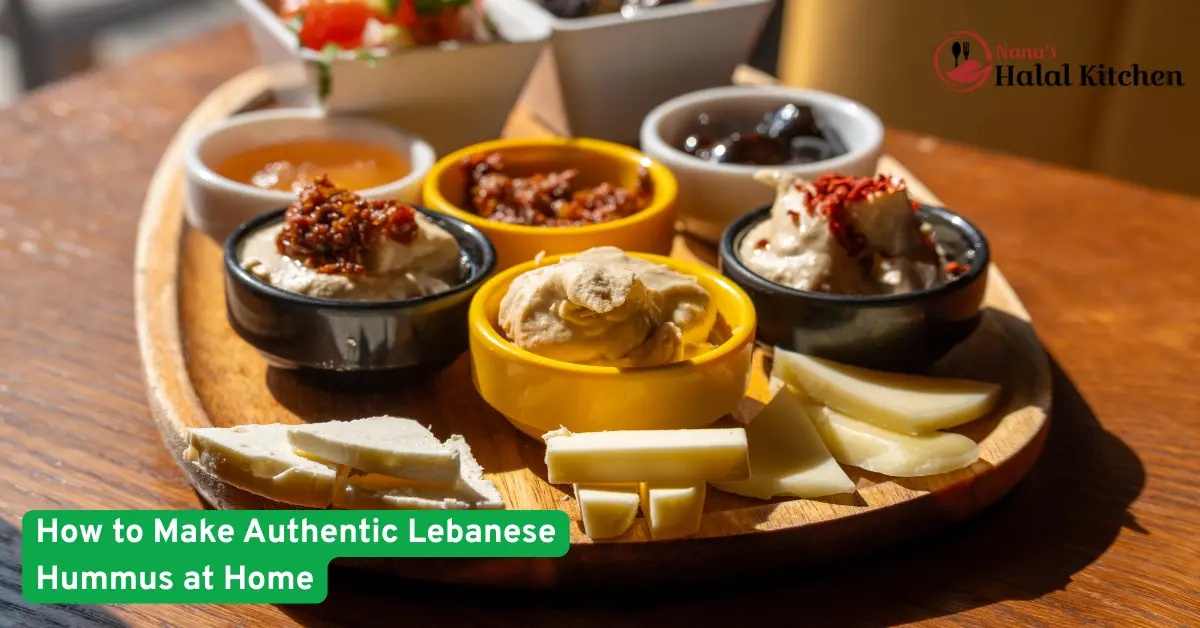
Real Lebanese hummus isn’t just a dip — it’s a love language. Smooth, silky, and rich with tahini, it takes just a handful of humble ingredients to make something truly unforgettable.”
Why Make Lebanese Hummus at Home?
If you’ve ever tasted authentic Lebanese hummus at a Middle Eastern restaurant and then tried the store-bought version afterward, you already know the answer. Homemade hummus is a completely different experience — creamier, fresher, and packed with depth of flavor that no plastic container can replicate.
At Nana’s Halal Kitchen in Manchester, CT, we believe great food starts with authentic recipes made from scratch. This guide will walk you through making genuine Lebanese hummus — the kind that’s been perfected over generations across Lebanon and the broader Levant.
What Makes Lebanese Hummus Different? Lebanese hummus uses a higher ratio of tahini and lemon juice than most commercial versions. It’s also blended much longer — sometimes 5+ minutes — to achieve that signature cloud-like creaminess. The real secret? Peeling the chickpeas.
Ingredients for Authentic Lebanese Hummus (Serves 6)
- 1½ cups dried chickpeas (or 2 cans)
- ½ cup high-quality tahini
- ¼ cup fresh lemon juice (about 2 lemons)
- 2–3 cloves garlic, minced
- ½ tsp fine sea salt (or to taste)
- ½ tsp ground cumin
- 3–5 tbsp ice-cold water
- 2 tbsp extra-virgin olive oil
- ½ tsp baking soda (if soaking dried chickpeas)
- Pinch of smoked paprika (to serve)
- Fresh parsley (to garnish)
- Whole chickpeas (to garnish)
Step-by-Step Recipe: Creamy Lebanese Hummus
Step 1 — Soak & Cook the Chickpeas (Skip if Using Canned) Rinse dried chickpeas and soak them overnight in plenty of cold water with ½ tsp baking soda. The next day, drain and rinse. Cook in fresh water for 1–2 hours until very soft — almost falling apart. This softness is key to ultra-smooth hummus.
Step 2 — Peel the Chickpeas (The Lebanese Secret) While still warm, gently rub the cooked chickpeas between your palms or in a kitchen towel to remove their translucent skins. It takes 5–10 minutes but makes a dramatic difference in smoothness. Reserve about 1 cup of the cooking water (aquafaba).
Step 3 — Blend the Tahini Base First Add tahini, lemon juice, garlic, and salt to a food processor. Blend for 90 seconds until the mixture becomes thick and pale. This step aerates the tahini and is what makes Lebanese hummus so light and creamy — don’t skip it!
Step 4 — Add the Chickpeas and Blend Add the warm peeled chickpeas and cumin to the tahini mixture. Blend on high for 3–5 minutes, scraping down the sides as needed. The warmth of the chickpeas helps them blend more smoothly.
Step 5 — Adjust Texture with Ice-Cold Water With the processor running, slowly drizzle in ice-cold water, one tablespoon at a time, until you reach the ideal silky consistency. Cold water makes the hummus lighter and fluffier. Taste and adjust salt and lemon as needed.
Step 6 — Serve the Lebanese Way Spread the hummus on a wide shallow plate using the back of a spoon to create a deep well in the center. Drizzle generously with extra-virgin olive oil. Sprinkle smoked paprika, whole chickpeas, and fresh parsley. Serve immediately with warm pita bread.
Pro Tips for the Best Hummus You’ve Ever Made
- Use warm chickpeas. Blending them while still warm results in a much smoother, creamier texture than cold ones from the fridge.
- Always peel your chickpeas. This one step separates good hummus from great hummus. Even with canned chickpeas, take the time to peel them.
- Quality tahini is non-negotiable. Look for Lebanese or Palestinian brands — the taste is far superior to generic supermarket versions.
- Lemon juice must be fresh. Bottled lemon juice is too acidic and flat. Always squeeze fresh lemons just before using.
- Blend for at least 3–4 minutes. Most people under-blend their hummus. The longer you blend, the lighter and fluffier it becomes.
- Let it rest 30 minutes before serving. The flavors meld beautifully as it rests at room temperature.
- Refrigerate in an airtight container. Hummus keeps well for up to 5 days. Drizzle fresh olive oil on top before storing to prevent drying.
How to Serve Lebanese Hummus
| Serving Style |
What to Pair It With |
| Classic Dip |
Warm pita bread, fresh vegetables (cucumber, carrots, radishes) |
| Hummus bil Lahme |
Topped with spiced ground lamb or beef and pine nuts |
| Mezze Plate |
Alongside tabbouleh, baba ganoush, falafel, and olives |
| In Wraps |
Spread inside chicken shawarma or falafel wraps |
| Breakfast Bowl |
With a soft poached egg, olive oil drizzle, and za’atar |
| Gyro Sauce |
As a creamy alternative to tzatziki in gyros |
Nutritional Benefits of Lebanese Hummus
Beyond its incredible taste, hummus is a nutritional powerhouse. A standard 2-tablespoon serving is rich in plant-based protein, fiber, and heart-healthy fats.
Per serving (approx.): Calories: ~80 | Protein: 4g | Healthy Fats: 6g | Carbs: 6g | Fiber: 2g | 100% Vegan & Halal
Chickpeas are an excellent source of iron, folate, and magnesium, while tahini provides calcium and vitamin E. It’s a snack you can feel truly good about.
Frequently Asked Questions (FAQs)
Q: What makes Lebanese hummus different from regular hummus? Lebanese hummus uses a higher ratio of tahini and fresh lemon juice compared to other styles. It’s also blended for much longer — often 4–5 minutes — and peeled chickpeas are used to achieve a signature ultra-smooth, almost fluffy consistency. The result is noticeably lighter and creamier than most commercial or quick-blend versions.
Q: Can I use canned chickpeas instead of dried? Yes! Canned chickpeas are a great time-saver and work perfectly. Drain and rinse them well, then follow the same peeling process. For best results, warm them slightly in water before blending. The hummus may be slightly less rich than the version made with slow-cooked dried chickpeas, but still absolutely delicious.
Q: Why is my hummus not smooth enough? The most common reasons for grainy or thick hummus are: not peeling the chickpeas, not blending long enough, using cold chickpeas, or not adding enough ice water. Blend for at least 4 minutes and add cold water gradually. Also check that your tahini is fresh and runny — old, seized tahini won’t blend smoothly.
Q: How long does homemade hummus last in the fridge? Homemade hummus stays fresh for 4–5 days when stored in an airtight container in the refrigerator. Always drizzle a thin layer of olive oil over the surface before sealing — this acts as a protective barrier and keeps the hummus from drying out. It also freezes well for up to 3 months.
Q: Is Lebanese hummus vegan and halal? Yes — traditional Lebanese hummus is 100% vegan and naturally halal. It contains only chickpeas, tahini, lemon juice, garlic, olive oil, and spices. There are no animal products involved, making it perfect for anyone observing halal dietary guidelines, as well as vegetarians and vegans.
Q: What is the best tahini to use for authentic hummus? Look for Lebanese or Palestinian brands such as Al Wadi, Soom, or Cortas. Good tahini should be light in color, have a slightly nutty and mildly bitter flavor, and pour easily without being stiff. Avoid tahini that smells overly bitter or has very thick, seized solids at the bottom.
Q: Can I make hummus without a food processor? A high-powered blender works great as an alternative and can sometimes produce an even smoother result. You can also use an immersion (stick) blender, though you’ll need to blend longer. Traditionally, hummus was made with a mortar and pestle — time-consuming but rewarding, with a unique rustic texture.
Q: How do I add toppings the Lebanese way? In Lebanon, hummus is served on a wide, shallow plate — never in a small bowl. Use the back of a large spoon to create a circular well in the center. Fill with extra-virgin olive oil, sprinkle smoked paprika or za’atar around the edges, add a few whole chickpeas, and finish with chopped flat-leaf parsley. Always serve with warm pita bread.
Craving the Real Thing? Visit Nana’s Halal Kitchen!
Making hummus at home is a joy — but sometimes you just want it freshly made, served with warm pita, and paired with the full Mediterranean experience. That’s where we come in.
At Nana’s Halal Kitchen, we serve authentic halal food made from scratch daily — from creamy hummus and tandoori platters to biryanis, gyros, and beyond.
👉 Explore our full menu: nanashalalkitchen.com/menu 📞 Order or inquire about catering: (860) 730-4321 📍 Find us: 180 Spruce St, Manchester, CT 06040 🕐 Hours: Open 7 days a week · 11 AM – 9:30 PM
Come hungry. Leave happy.